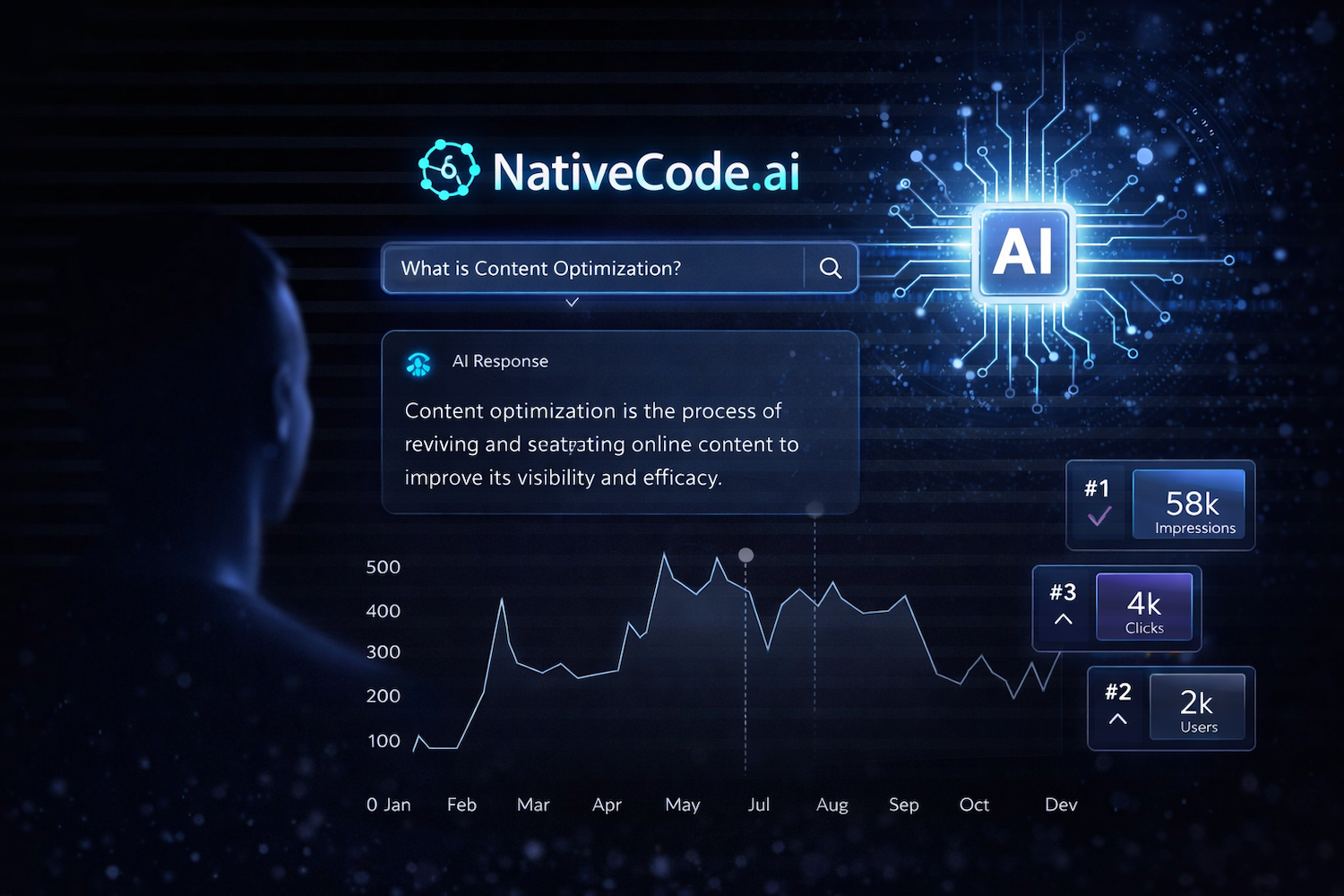
How Search Visibility Is Being Rewritten by Artificial Intelligence
Introduction
For more than two decades, Search Engine Optimization (SEO) has been the dominant strategy brands used to increase digital visibility, customer acquisition, and online revenue growth. Organizations invested heavily in keyword research, content production, backlink acquisition, and technical optimization to compete for rankings across traditional search engines.
Today, the way customers discover brands is undergoing a fundamental transformation.
Search engines are no longer the only gateway to discovery. Increasingly, consumers rely on artificial intelligence platforms such as conversational search assistants, generative search interfaces, and recommendation-driven discovery environments to make purchasing decisions, research services, and evaluate brands.
These platforms do not simply rank pages. They generate answers, summarize information, recommend providers, and shape customer perception directly within their interfaces.
As discovery evolves, traditional SEO alone is no longer sufficient to ensure brand visibility. Organizations must now adopt a broader strategic discipline: AI Discovery Strategy.
The Traditional SEO Era: Ranking as the Primary Visibility Model
Historically, SEO focused on improving a brand’s position within search engine results pages. Visibility depended heavily on how well a page aligned with algorithmic ranking factors such as keyword relevance, backlink authority, content quality, and technical accessibility.
This ranking-driven model shaped how marketing and growth teams approached organic acquisition.
Organizations developed content strategies centered around keyword targeting. Technical teams optimized crawl efficiency and page performance. Outreach initiatives focused on building backlinks to strengthen domain authority. Success was measured through rankings, organic traffic growth, and conversion performance.
This approach proved highly effective during a time when customer journeys began primarily within search engines. However, the emergence of generative search and AI-driven recommendation platforms has expanded the discovery landscape far beyond traditional ranking environments.
The Shift Toward AI-Driven Discovery
Artificial intelligence has fundamentally changed how users interact with information.
Modern search behavior increasingly involves:
• Asking conversational questions
• Requesting curated recommendations
• Comparing brands through AI-generated summaries
• Exploring guided research experiences
Instead of scanning search result pages, users now receive direct answers synthesized from multiple sources. These answers often determine which brands users trust before they ever visit a website.
This transformation introduces a critical change: visibility is no longer determined solely by rankings. It is influenced by how AI systems interpret, synthesize, and recommend brand information.
AI discovery platforms evaluate authority signals, content relationships, structured data clarity, brand reputation signals, and cross-platform consistency when determining which sources to cite or recommend.
From SEO to AI Discovery Strategy
AI Discovery Strategy expands beyond traditional optimization practices. It requires organizations to build digital ecosystems that communicate clearly with both search engines and artificial intelligence systems.
While SEO focuses primarily on page-level ranking signals, AI discovery strategy focuses on ecosystem-level authority signals.
Key differences include:
Traditional SEOAI Discovery StrategyKeyword optimizationEntity and topic authority modelingPage-level optimizationEcosystem and knowledge graph visibilityRanking-focused success metricsCitation, recommendation, and representation visibilityLink authority emphasisMulti-signal authority trust modelingSearch engine-centricMulti-platform discovery optimization
Organizations that fail to evolve toward discovery-focused visibility risk losing brand influence within AI-generated decision environments.
The Emergence of Discovery Architecture
One of the most significant shifts accompanying AI discovery is the growing importance of discovery architecture.
Discovery architecture refers to the structural framework that defines how content, entities, technical infrastructure, and authority signals connect across a digital ecosystem.
This includes:
Technical Discovery Infrastructure
Ensuring crawlability, performance, and structured data clarity across platforms.
Content Relationship Modeling
Establishing topic clusters, internal linking frameworks, and entity alignment that communicate semantic relationships between content assets.
Authority Signal Distribution
Strengthening trust signals through brand reputation, digital PR, third-party validation, and cross-platform presence.
Platform Ecosystem Integration
Optimizing how brands appear across search engines, AI assistants, marketplaces, and content distribution channels.
Organizations that invest in discovery architecture often achieve stronger long-term visibility stability compared to those relying solely on content volume or backlink expansion.
Why AI Discovery Strategy Requires Cross-Functional Leadership
AI discovery visibility cannot be managed as an isolated marketing channel. It requires coordination across multiple organizational functions.
Product Teams
Product teams influence site structure, user experience design, and platform capabilities that directly impact discovery performance.
Engineering Teams
Engineering teams support technical SEO infrastructure, structured data implementation, and scalable content frameworks.
Content Teams
Content teams translate audience intent into authoritative, semantically connected knowledge ecosystems.
Brand and PR Teams
Brand perception, media coverage, and public authority signals increasingly influence AI trust modeling.
As a result, AI discovery strategy often operates at the intersection of marketing, product, engineering, and brand governance.
The Rise of Entity-Based Search Visibility
AI search platforms rely heavily on entity understanding rather than keyword matching alone.
Entities represent identifiable concepts such as brands, products, people, and services. AI models evaluate relationships between entities to determine authority, expertise, and trustworthiness.
Organizations must ensure consistent entity representation across:
• Website content ecosystems
• Structured data frameworks
• Third-party authoritative sources
• Social and knowledge graph environments
Strong entity alignment increases the probability that AI systems correctly interpret brand expertise and include organizations in generated answers.
Measuring Success in AI Discovery Environments
Traditional SEO performance metrics focused heavily on rankings and traffic volume. While these indicators remain important, discovery strategy introduces additional measurement dimensions.
Modern success indicators include:
• AI citation frequency
• Brand representation accuracy across AI answers
• Topic authority footprint expansion
• Knowledge graph presence and reinforcement
• Multi-platform discovery consistency
Organizations that track these signals gain deeper insight into brand visibility beyond traditional traffic analytics.
The Competitive Advantage of Early AI Discovery Adoption
Brands that proactively invest in AI discovery strategy gain several advantages:
Increased Recommendation Visibility
AI assistants frequently recommend trusted brands, amplifying exposure without requiring user click behavior.
Enhanced Authority Perception
Brands consistently cited across AI-generated answers build perceived expertise and credibility.
Greater Discovery Channel Diversification
Organizations reduce reliance on traditional search rankings by expanding visibility across emerging discovery platforms.
Long-Term Visibility Stability
Discovery architecture frameworks support scalable growth even as algorithms evolve.
Implementing AI Discovery Strategy: A Strategic Framework
Organizations transitioning toward AI discovery visibility typically follow several core phases:
Phase 1: Discovery Ecosystem Audit
Evaluating current visibility across search engines, AI assistants, and knowledge graph environments.
Phase 2: Authority Signal Mapping
Identifying gaps in entity representation, content coverage, and trust signals.
Phase 3: Discovery Architecture Development
Designing structural content frameworks, internal linking systems, and structured data governance models.
Phase 4: Cross-Platform Visibility Expansion
Aligning content, brand signals, and authority signals across multiple discovery environments.
Phase 5: Performance Measurement and Optimization
Monitoring citation patterns, authority growth, and discovery representation trends.
The Future of Search Is Discovery-Centric
Search behavior will continue evolving toward conversational, recommendation-driven, and AI-assisted experiences.
Organizations that remain focused solely on ranking positions risk losing visibility within the broader discovery ecosystem shaping modern customer journeys.
AI discovery strategy does not replace SEO. Instead, it expands optimization beyond traditional search engines into a comprehensive visibility discipline designed for how customers discover brands today.
Conclusion
The transition from SEO to AI discovery strategy represents one of the most significant transformations in digital marketing history. As artificial intelligence reshapes how users research, compare, and select brands, organizations must rethink how visibility is built and maintained.
Success in this new landscape depends on discovery architecture, entity authority modeling, cross-functional governance, and ecosystem-level visibility optimization.
Brands that embrace AI discovery strategy early will be better positioned to influence customer perception, maintain competitive visibility, and drive sustainable organic growth across the next generation of search environments.
Insights from the Field
Practical guidance on SEO, AEO, and scalable growth — based on real systems, not theory.