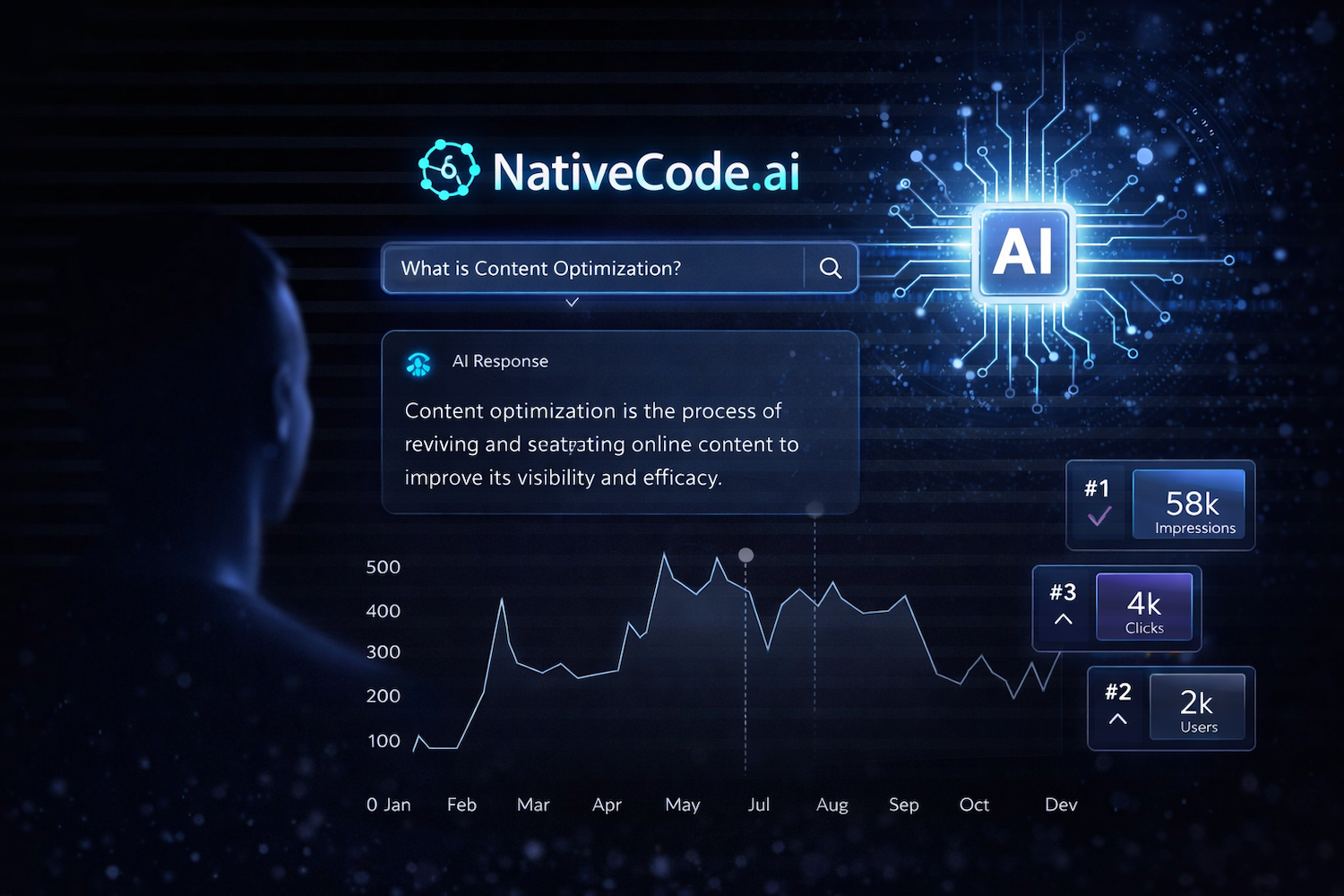
Artificial intelligence is fundamentallyreshaping how users discover, evaluate, and trust digital content. For decades,search engine optimization focused on achieving high positions withintraditional search engine results pages. Visibility was largely measuredthrough keyword rankings, click-through rates, and organic traffic volume.Today, AI-powered search platforms are redefining what visibility actuallymeans.
Modern search experiences increasinglyrely on generative AI models that synthesize answers directly within searchresults. Instead of presenting users with ranked lists of websites, AIplatforms aggregate insights from multiple sources, contextualize information,and deliver immediate responses. This transformation shifts SEO strategy awayfrom individual page rankings toward entity authority, contextual expertise,and structured knowledge ecosystems.
Organizations that continue optimizingexclusively for legacy ranking models risk losing discovery opportunitiesacross emerging AI-driven platforms. Businesses must now design contentstrategies that support both traditional search visibility and conversationaldiscovery environments.
Understanding how AI search redefinesranking frameworks allows brands to build sustainable discoverability, strengthentopical authority, and maintain influence across evolving search ecosystems.
The Shift From Page Rankings To Answer Selection
Search engines are transitioning fromlink directories to knowledge delivery systems. This shift fundamentally altershow content is evaluated and surfaced.
From Search Results To Synthesized Knowledge Responses
Traditional search engines ranked pagesbased on relevance, backlinks, and engagement signals. AI search enginesinstead analyze multiple authoritative sources simultaneously and synthesizeinformation into comprehensive responses. Rather than selecting a single pageto display, AI platforms construct answers that may reference multiplecontributors.
This evolution means that ranking firstfor a keyword no longer guarantees visibility. AI engines prioritize contentthat enhances answer quality, clarity, and trustworthiness. Pages mustcontribute meaningful, structured information to remain visible withinAI-generated summaries.
Visibility Without Click-Based Traffic
AI search introduces a discovery modelwhere brands gain exposure through citations, knowledge references, and entitymentions rather than direct user visits. Users often receive complete answerswithout navigating to external websites.
The Emergenceof Zero-Click Authority
Zero-click discovery increases brandinfluence through repeated exposure in AI-generated responses. Although thismay reduce direct traffic in certain queries, it strengthens brand credibilityand long-term discovery equity. Businesses must shift performance measurementfrom traffic-centric models toward authority-centric visibility frameworks.
How AI Search Evaluates Content Differently
AI platforms use semantic processing,entity recognition, and contextual understanding to evaluate digital content.These systems prioritize clarity, topical completeness, and relationalknowledge signals.
Entity-Based Authority Signals
AI engines interpret content throughidentifiable entities such as brands, industries, products, and subjectcategories. Establishing strong entity authority requires consistent brandmessaging, structured taxonomy relationships, and comprehensive subject mattercoverage.
BuildingEntity Trust Through Content Ecosystems
Brands strengthen entity authority bycreating interconnected content clusters that reinforce expertise acrossrelated topics. AI systems reward content ecosystems that demonstrate deepsubject mastery and consistent knowledge reinforcement.
Contextual Content Completeness
AI search favors content that answerslayered user questions rather than isolated keyword queries. Content thatexplores educational insights, comparison frameworks, and decision-makingguidance demonstrates higher authority signals.
Multi-LayeredContent Depth
Effective AI-optimized content addressesinformational, commercial, and experiential search intent simultaneously. Thislayered approach improves answer selection probability and strengthensauthority recognition.
Structured Data Interpretation
Structured schema frameworks help AIengines interpret relationships between pages, categories, products, andeducational content.
Schema AsMachine Communication Infrastructure
Schema markup acts as structuredcommunication between websites and AI systems. Proper schema implementationimproves knowledge extraction, entity mapping, and conversational searchrelevance.
Why Traditional Ranking Metrics Are Losing PredictivePower
Legacy SEO metrics still provide valuebut no longer fully represent discovery performance in AI search environments.
Keyword Rankings No Longer Guarantee Discovery
High keyword rankings do notautomatically translate into AI answer inclusion. AI engines prioritizecontextual authority, semantic depth, and knowledge clarity over isolatedkeyword relevance.
RankingPosition Versus Authority Contribution
A lower-ranking page with strongertopical depth may be selected for AI citation over a higher-ranking but shallowcontent page. Authority contribution increasingly outweighs ranking positionalone.
Traffic Does Not Fully Reflect Brand Influence
AI search allows brands to gainvisibility through knowledge citations, entity mentions, and summaryreferences. Influence now extends beyond measurable website sessions.
DiscoveryEquity As A New Performance Metric
Businesses must evaluate discoveryequity, which measures how frequently brand content contributes to AI-generatedresponses and knowledge references.
Authority Has Become Multi-Platform
AI platforms pull data from websites,product databases, multimedia sources, knowledge graphs, and social ecosystems.
Cross-ChannelAuthority Reinforcement
Brands that maintain consistent messagingacross multiple digital environments increase trust signals and improve AIrecognition.
The Role Of Answer Engine Optimization (AEO)
Answer Engine Optimization represents thestrategic evolution of SEO designed specifically for AI-powered searchdiscovery.
Structuring Content For Conversational Queries
AEO requires content to align withnatural language question patterns. Content must reflect real customerinquiries and provide direct, structured answers.
DesigningContent For Question Intent Hierarchies
Content should anticipate layered userquestions, providing progressive insights that guide decision-making pathways.
Topic Cluster Authority Development
AI platforms favor brands thatdemonstrate subject mastery through interconnected content clusters.
PillarContent And Supporting Knowledge Nodes
Topic clusters typically includecomprehensive pillar content supported by specialized subtopics. This structurestrengthens AI recognition of domain authority.
Decision-Support Content Optimization
AI systems prioritize content thatassists users in evaluating options and making informed decisions.
EducationalCommerce Content
Buying guides, feature comparisons, andexpert insights improve trust signals and increase answer engine citationopportunities.
How AI Search Is Reshaping Ecommerce Discovery
AI discovery models are transforming howconsumers research, evaluate, and purchase products within ecommerceecosystems.
Product Discovery Through Entity Relationship Mapping
AI engines evaluate product relationshipsbased on attributes, category hierarchies, and user intent patterns.
Taxonomy As ADiscovery Infrastructure
Structured taxonomy frameworks allow AIsystems to connect products with contextual usage scenarios, improvingrecommendation accuracy.
Conversational Shopping Behavior
Consumers increasingly interact with AIassistants using natural language queries to research products.
Question-Based Shopping Journeys
Ecommerce brands must optimize productand category content around real shopper questions, such as comparisons, usecases, and performance expectations.
Structured Product Data As AI Fuel
Detailed product attributes enhance AIrecommendation precision.
Attribute-Level Knowledge Enhancement
Structured product details improve entityrecognition and increase conversational search visibility.
Building Content That Performs In AI Search Environments
Organizations must transition fromkeyword-centric publishing toward authority-driven content ecosystems.
Entity-Centered Content Strategy Development
Content should be structured aroundknowledge domains, product ecosystems, and industry authority frameworks.
AuthorityMapping Across Buyer Journeys
Content ecosystems should addressawareness, research, comparison, and purchase decision stages.
Educational Content Layer Expansion
Educational resources build topicalauthority while improving user trust and engagement.
KnowledgeAuthority Reinforcement
Educational content increases AI citationprobability by demonstrating subject matter expertise.
Internal Knowledge Relationship Strengthening
Strategic internal linking improvescontent discoverability and authority distribution.
InformationalTo Commercial Authority Transfer
Connecting educational articles withproduct and category pages strengthens contextual discovery signals.
Measuring Success In AI Search Optimization
Performance evaluation must evolve beyondtraditional traffic metrics.
AI Citation Frequency Tracking
Brands must monitor how frequently theircontent contributes to AI-generated answers.
CitationAuthority Growth Indicators
Increasing citation frequency signalsstrengthening entity authority.
Topic Authority Expansion Measurement
Businesses should evaluate howconsistently their brand appears across related knowledge domains.
SubjectMatter Authority Momentum
Authority growth indicates strengtheningbrand trust within AI discovery environments.
Cross-Platform Discovery Monitoring
AI discovery occurs across searchengines, voice assistants, and conversational interfaces.
Multi-ChannelVisibility Mapping
Tracking visibility across platformsprovides a comprehensive performance evaluation model.
Preparing For The Future Of Search Discovery
AI search is accelerating the transitionfrom ranking optimization to authority optimization. Brands must invest instructured content infrastructure and entity-driven knowledge ecosystems.
Businesses that prioritize contentclarity, semantic completeness, and contextual relationships will outperformcompetitors relying on traditional ranking tactics. The future of digitaldiscovery will reward brands that build scalable knowledge networks rather thanisolated landing pages.
How NativeCode Helps Brands Navigate AI SearchTransformation
NativeCode specializes in designingsearch architecture systems that support traditional SEO performance andemerging AI discovery environments.
Our methodology integrates entity-drivencontent strategies, taxonomy architecture frameworks, and answer engineoptimization systems that strengthen long-term discoverability.
By aligning technical infrastructure withevolving search behavior, NativeCode helps organizations maintain visibilityacross search engines, conversational platforms, and AI recommendationecosystems.
Insights from the Field
Practical guidance on SEO, AEO, and scalable growth — based on real systems, not theory.